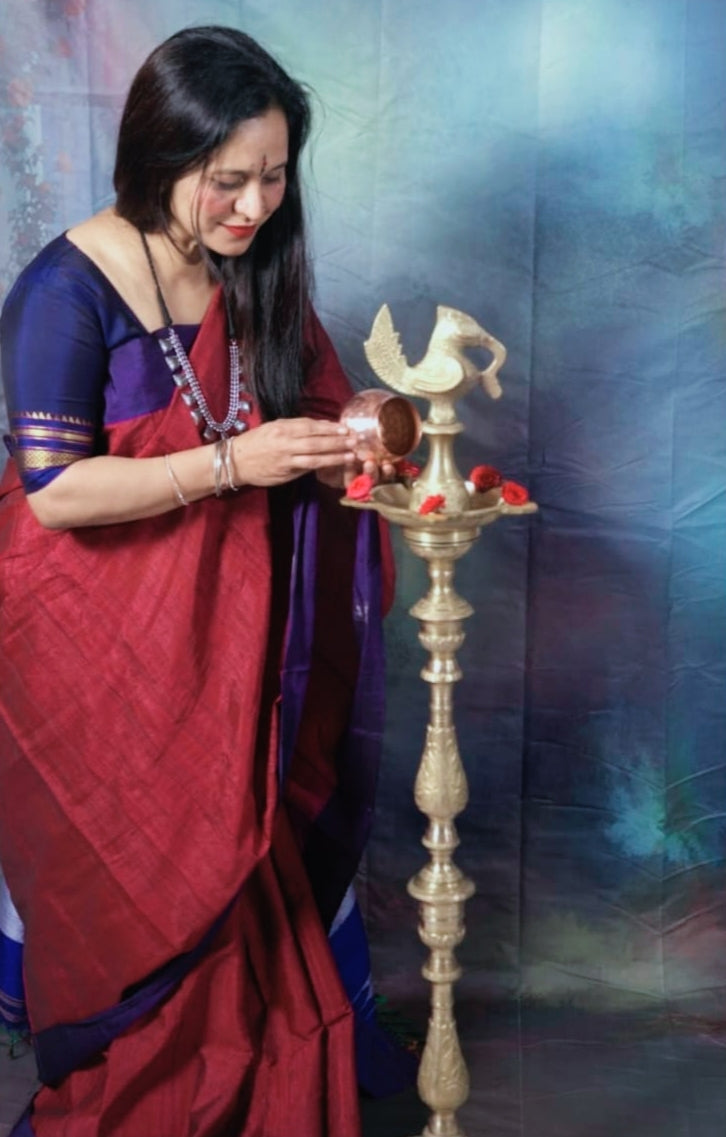
FAQs About Ilkal Saree
FAQs About Ilkal Sarees
1. Why are Ilkal sarees so popular?
Ilkal sarees are popular because of their:
- Unique Tope Teni weaving technique
- Rich traditional Karnataka heritage
- Comfortable fabric for daily and festive wear
- Long-lasting handloom quality
- Distinctive contrast borders and pallu
- Elegant look that suits all age groups
Their lightweight feel and royal appearance make them both practical and graceful.
2. Why do many independent and working women prefer Ilkal sarees?
Many women prefer Ilkal sarees because:
- They are comfortable for long hours
- Easy to drape and maintain
- Lightweight compared to heavy silk sarees
- Elegant yet professional for office wear
- Reflect confidence, tradition, and individuality
- Available in both simple and premium designs
Teachers, entrepreneurs, government officers, artists, and professionals often choose Ilkal sarees for their blend of comfort and culture.
3. Are Ilkal sarees made of cotton or silk?
Ilkal sarees come in:
- Pure Cotton
- Cotton-Silk blend
- Pure Silk
- Mercerized cotton varieties
Traditionally:
- The body is mostly cotton
- The border and pallu use silk or art silk
This combination gives both comfort and richness.
4. Does Ilkal Saree have a GI Tag?
Yes. Ilkal Sarees have a Geographical Indication (GI) Tag.
- GI Tag awarded: 2007
- GI Number: 43
The GI tag protects the authenticity and traditional weaving style of Ilkal sarees.
5. What is special about the Ilkal saree pallu?
The pallu of an Ilkal saree is called "Tope Teni Pallu".
It is famous for:
- Separate weaving and joining technique
- Temple-style patterns
- Red and white traditional designs
- Symbolic motifs like chariot, temple towers, lotus, and lamps
The pallu is the identity of an authentic Ilkal saree.
6. What is the usual length of an Ilkal saree?
Traditional Ilkal sarees are available in:
- 6.2 to 6.5 meters (regular sarees)
- 9 yards (traditional draping style)
Most modern Ilkal sarees come with blouse fabric attached.
https://www.youtube.com/watch?v=_IlI1u_Uwsg&t=187s
Best Blouse Fabrics for Ilkal Sarees
7. Which blouse fabrics suit Ilkal sarees?
Excellent blouse combinations:
- Khun Fabric Blouse — Most traditional and stylish choice
- Ikkat Blouse — Gives a contemporary ethnic look
- Kalamkari Blouse — Artistic and classy
- Sambalpuri Fabric Blouse — Rich handloom fusion styling
- Plain raw silk blouse
- Ajrakh printed blouse
- Banarasi brocade blouse
- Linen blouse for office wear
- Contrast cotton blouse
8. Which blouse is BEST for traditional Ilkal sarees?
The most loved combination is:
Ilkal Saree + Khun Blouse
Why?
- Both belong to Karnataka handloom heritage
- Rich texture combination
- Perfect festive and bridal styling
- Looks elegant in photos and functions
9. Which blouse neck designs suit Ilkal sarees?
Popular blouse neck styles:
- Boat neck
- High neck
- Pot neck
- Princess cut
- Square neck
- Elbow sleeve traditional blouse
- Puff sleeve vintage style
More Frequently Asked Questions
10. What are the traditional colors of Ilkal sarees?
Classic Ilkal colors include:
- Pomegranate red
- Peacock blue
- Parrot green
- Mustard yellow
- Deep maroon
- Black with red border
11. What motifs are used in Ilkal sarees?
Common motifs include:
- Temple borders
- Lotus
- Elephant
- Chariot
- Peacock
- Geometric checks and stripes
12. How long does it take to weave an Ilkal saree?
A handwoven Ilkal saree may take:
- 3 to 7 days
depending on design complexity.
13. Are Ilkal sarees suitable for weddings?
Yes.
Silk Ilkal sarees with zari borders are popular for:
- Weddings
- Festivals
- Religious functions
- Traditional ceremonies
14. Can Ilkal sarees be worn daily?
Absolutely.
Cotton Ilkal sarees are excellent for:
- Office wear
- Teaching profession
- Summer wear
- Daily traditional styling
15. What makes the border of an Ilkal saree unique?
The border of an Ilkal Saree is unique because it is woven separately and then interlocked with the saree body using a special technique called “Tope Teni.”
Special features of the border:
- Broad contrast borders
- Traditional temple-inspired designs
- Strong and durable weaving
- Signature red borders in classic styles
- Combination of cotton body with silk border
This intricate joining technique is one of the biggest reasons authentic Ilkal sarees are admired across India.
16. Why are Ilkal sarees considered timeless?
Because they combine:
- Tradition
- Comfort
- Elegance
- Durability
- Regional craftsmanship
An Ilkal saree never goes out of style.
17. Are Ilkal sarees expensive?
Price depends on material:
- Cotton Ilkal: Affordable
- Cotton-silk: Mid-range
- Pure silk Ilkal: Premium
Handwoven pieces cost more due to artisan craftsmanship.
18. Which jewelry matches Ilkal sarees?
Best jewelry choices:
- Temple jewelry
- Antique gold jewelry
- Oxidized silver
- Terracotta jewelry
- Pearl necklaces
- Traditional Karnataka jewelry
19. Which footwear suits Ilkal sarees?
- Kolhapuri chappals
- Ethnic wedges
- Block heels
- Handmade juttis
- Traditional sandals
20. Why should we support Ilkal handloom sarees?
Buying authentic Ilkal sarees:
- Supports Karnataka weavers
- Preserves Indian handloom heritage
- Encourages sustainable fashion